
Skysnag: Automated DMARC Enforcement & Email Security Platform.
Your domain is being impersonated right now. You just cannot see it yet.
Skysnag stops email spoofing at the source across every domain you own, getting you to full protection 7x faster than manual implementation. No DNS expertise required.
Google and Yahoo began requiring DMARC for bulk senders in 2024. From May 2025, Microsoft enforces DMARC across Outlook and Exchange Online for all business senders. PCI-DSS v4 now mandates anti-phishing controls including SPF, DKIM, and DMARC. Organisations without proper email authentication face rejected mail, damaged deliverability, and open exposure to domain impersonation.
See how secure your email domain really is!
Enter your work email to instantly check your domain’s DMARC, SPF, DKIM, BIMI, MTA-STS, and TLS-RPT configuration—and uncover gaps that could leave your brand vulnerable to spoofing and impersonation.


Email is still the most common entry point for fraud, and most domains are not properly protected.
Every day, attackers send emails pretending to be your organisation. They target your customers, your suppliers, and your own employees. Without SPF, DKIM, and DMARC properly configured and enforced, there is nothing stopping them from using your domain name to deliver phishing attacks, business email compromise attempts, and fraud.
Your domain used to attack your own customers
Attackers send emails from your domain to your customers. The emails look legitimate. Without DMARC enforcement, there is no technical mechanism to stop them. Your brand takes the reputational damage.

DMARC implementation is harder than it looks
Getting from a DMARC monitoring policy to full enforcement without breaking legitimate email requires months of analysis, careful DNS changes, and coordination across every system that sends on your behalf. Most organisations start and stall.
Shadow senders you do not know about
Marketing tools, CRMs, billing systems, support platforms — every SaaS tool that sends email on your behalf is a potential authentication gap. Most IT teams do not have a complete picture of everything sending as their domain.
SPF, DKIM, and DMARC work together. Skysnag manages all three.
Email authentication is built on three interlocking standards. Each one addresses a different vulnerability. All three are required to achieve meaningful protection against domain impersonation.

Sender Policy Framework
Specifies which mail servers are authorised to send email from your domain. Receiving servers check incoming mail against your SPF record and reject mail from unauthorised sources.
DomainKeys Identified Mail
Adds a cryptographic signature to outgoing emails. Receiving servers verify the signature to confirm the email genuinely came from your domain and has not been tampered with in transit.
Domain-based Message Authentication
Ties SPF and DKIM together. Tells receiving servers what to do when a message fails authentication — none, quarantine, or reject — and sends reports back to you so you can see what is happening across your domain.
Six capabilities. One dashboard. From monitoring to full enforcement.
Skysnag covers the full email authentication and brand protection lifecycle. Organisations can start with monitoring and progress to full enforcement in weeks rather than months.

Monitor
Full visibility into who is sending as your domain, what is failing, and where threats are coming from.

Protect
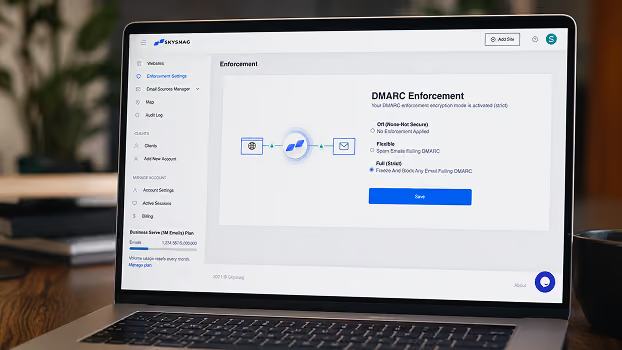
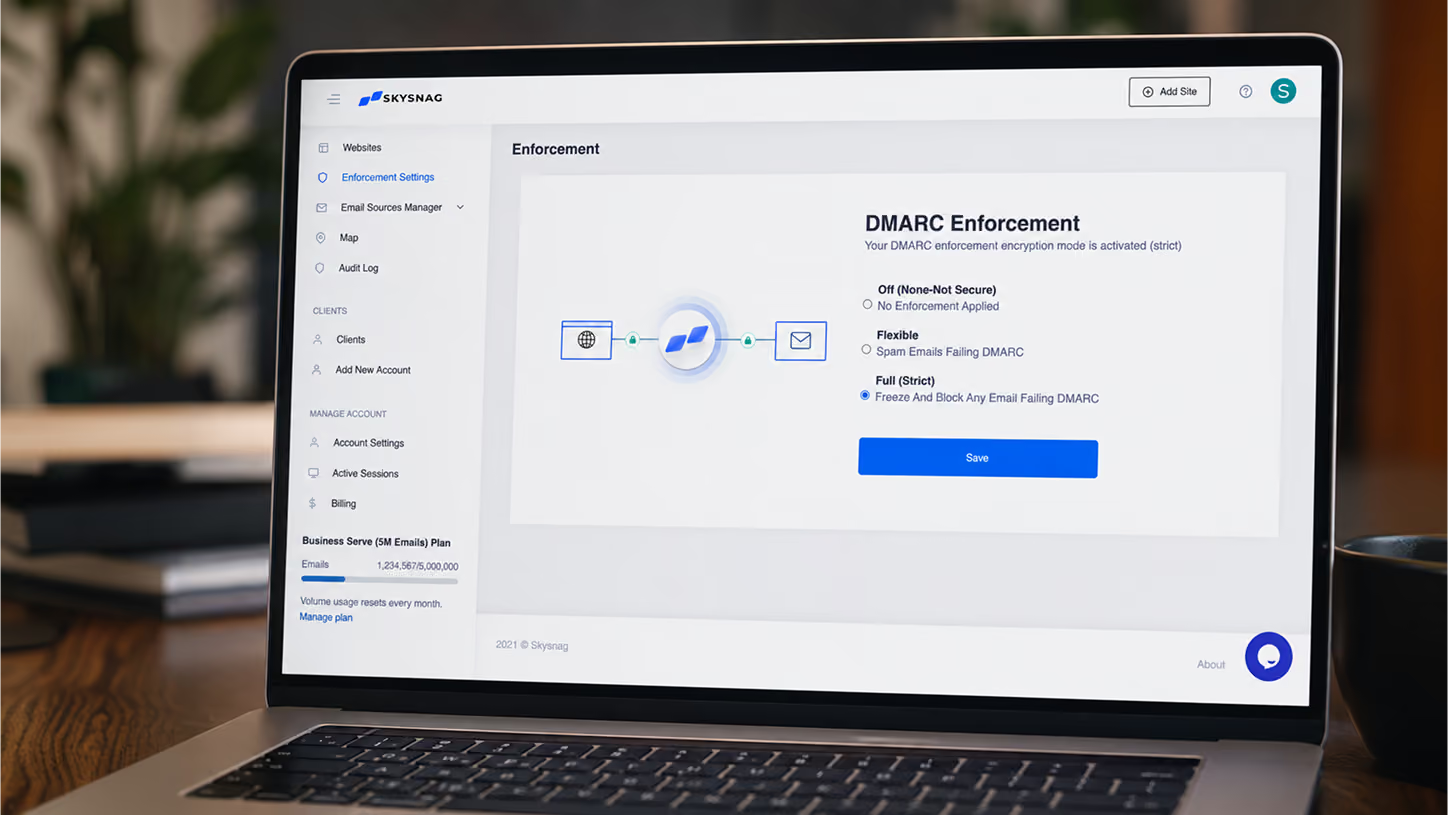
Automated DMARC enforcement with guided policy progression and zero legitimate mail disruption.

Certify
BIMI (Brand Indicators for Message Identification) — display your brand logo in recipients' inboxes.

Comply
Meet Microsoft, Google, Yahoo, and PCI-DSS requirements automatically as standards evolve.

Validate
Email address validation to eliminate bounce rates and protect your database from false submissions.

BrandGuard
Protects your brand from look-alike domains, cloning sites, and credential harvesting attacks.
Compatible with your system
Skysnag seamlessly integrates with leading email service providers - and more than 1,000 sending services.



%201.svg)







What makes Skysnag different from manual DMARC tools.

Fully autonomous enforcement
Skysnag auto-discovers every sending source, configures the right authentication records, and progresses DMARC policy from monitoring through to full rejection without requiring manual DNS intervention at each step. Industry average implementation time is 6 to 12 months. Skysnag customers reach p=reject in weeks.
%201.svg)
Control Centre for third-party senders
Skysnag's Control Centre is the first solution that simplifies management of authorised third-party senders — Google Workspace, Microsoft 365, HubSpot, Salesforce, Okta, and 1,000 more. Add or remove services instantly to ensure only legitimate platforms send on behalf of your domain.

Precision Globe Visibility
A real-time interactive visualisation showing email authentication activity worldwide, including the geographic distribution of spoofing attempts and legitimate sending patterns. Turns raw DMARC data into something your security team can act on.

Multi-domain management at scale
From one domain to ten thousand, a single Skysnag dashboard manages authentication across your entire portfolio with zero per-domain overhead. Particularly valuable for enterprises with multiple brands and MSSPs managing client domains.
Any organisation that sends email from a domain they care about protecting.
IT and security teams
Need to get to DMARC enforcement without months of manual DNS work, while making sure no legitimate mail is disrupted in the process. Skysnag handles the technical complexity and shows the progress.
Marketing teams
Need campaigns to land in the inbox, not spam. Proper DMARC authentication improves deliverability, and BIMI certification puts the brand logo in recipients' inboxes for verified senders.
Financial services
Banks and financial institutions face targeted impersonation attacks against customers. DMARC enforcement is also required by PCI-DSS v4, NCA, and SAMA frameworks. Skysnag addresses both the security and compliance requirement.
Government and public sector
Government domains are high-value targets for impersonation. Citizens receiving emails purportedly from government agencies are particularly vulnerable to phishing. DMARC enforcement closes this attack surface.
MSSPs managing multiple clients
Skysnag's multi-domain management and MSP programme allows managed service providers to deploy and monitor DMARC across all client domains from a single pane, with white-labelling options available.
Any organisation sending bulk email
If your organisation sends more than 5,000 emails per day to Gmail, Yahoo, or Outlook users, DMARC is now a requirement from the receiving platforms. Non-compliance means rejected mail and damaged sender reputation.
Every standard your email infrastructure needs.

How a typical engagement looks
Domain scan
Setup
Monitor
Resolve
Enforce
Monitor

Compliance
Frequently Asked Questions
Skysnag automates email authentication, taking organisations to DMARC enforcement roughly seven times faster than manual configuration. It protects domains against impersonation, business email compromise and the deliverability damage that follows spoofing.
DMARC is an email authentication standard that tells receiving mail servers what to do with messages that fail authentication checks. Correctly enforced, it stops attackers sending mail that appears to come from your domain — the mechanism behind most business email compromise.
No, and this is the most common misunderstanding. As of 2026 roughly 78% of domains have a DMARC record but only 42% actually enforce it. A record set to monitor-only observes attacks without stopping them. Protection begins at enforcement, not publication.
Around 31% of MEA's largest companies have no DMARC protection at all, and a further 68% sit at monitor-only — visible attacks, no blocking. The regional enforcement gap is wider than the global average, and attackers actively exploit it.
Skysnag is designed to move an organisation from monitor-only to full enforcement in around 30 days rather than the months manual configuration typically takes. The constraint is avoiding disruption to legitimate mail flows, which is what automation manages.
The Kernel distributes Skysnag across the UAE, Middle East, Africa and CIS through its channel partner network. A DMARC audit reveals current domain exposure in roughly ten minutes, which is the usual starting point for an engagement.
A DMARC record is a DNS entry published by a domain owner that tells receiving mail servers how to handle emails claiming to come from that domain but failing authentication checks. It builds on SPF and DKIM, adding a policy instruction and a reporting address so the domain owner gets visibility into who is sending email — legitimately or not — on their behalf.
When an email arrives, the receiving mail server checks whether it passes SPF and DKIM authentication and whether those results align with the domain in the visible "From" address. Based on the policy published in the domain's DMARC record, the server then delivers, quarantines, or rejects the message if it fails that check, and sends aggregate reports back to the domain owner summarising the results.
The DMARC policy tag tells receiving servers what action to take on emails that fail authentication: none takes no action and simply generates reports for monitoring, quarantine routes failing emails to spam or junk folders, and reject blocks them outright before delivery. Organisations typically start at none to gather visibility, then move gradually toward reject as they confirm all their legitimate sending sources are properly authenticated.
Ready to protect your domain from impersonation?

Talk to our team or run a free domain scan to see your current email authentication posture. We will show you exactly where the gaps are and how to close them.