
Open Source Password and Secrets Manager.
Weak and reused passwords are still the way most breaches start. Bitwarden closes that door.
Trusted by millions of users and thousands of organizations, Bitwarden secures credentials with end-to-end encrypted vaults, passwordless authentication, and secrets management for developers, all in one platform, with the option to self-host.
Open source and publicly audited. End-to-end encrypted. Self-host or cloud. No proprietary black box.


Credentials are the front door, and most organisations leave it unlocked.
The majority of breaches still trace back to a weak, reused, or stolen password. Employees juggle dozens of logins, reuse the same handful across systems, and store them in browsers, spreadsheets, and sticky notes. Meanwhile developers scatter API keys and secrets through code and config files. It is the most common attack surface and the most neglected.
Reused passwords everywhere
When one credential is reused across systems, a single breach anywhere becomes a breach everywhere. Without a password manager, reuse is the default behaviour, not the exception.

No visibility into credential hygiene
Security teams have no way to see which employees use weak or compromised passwords, where credentials are shared insecurely, or which accounts lack MFA. You cannot fix what you cannot see.
Secrets hardcoded into applications
API keys, database credentials, and tokens end up committed to repositories and buried in config files. When they leak, attackers get direct access to infrastructure, and rotating them becomes a manual nightmare.
One platform for human credentials and machine secrets.
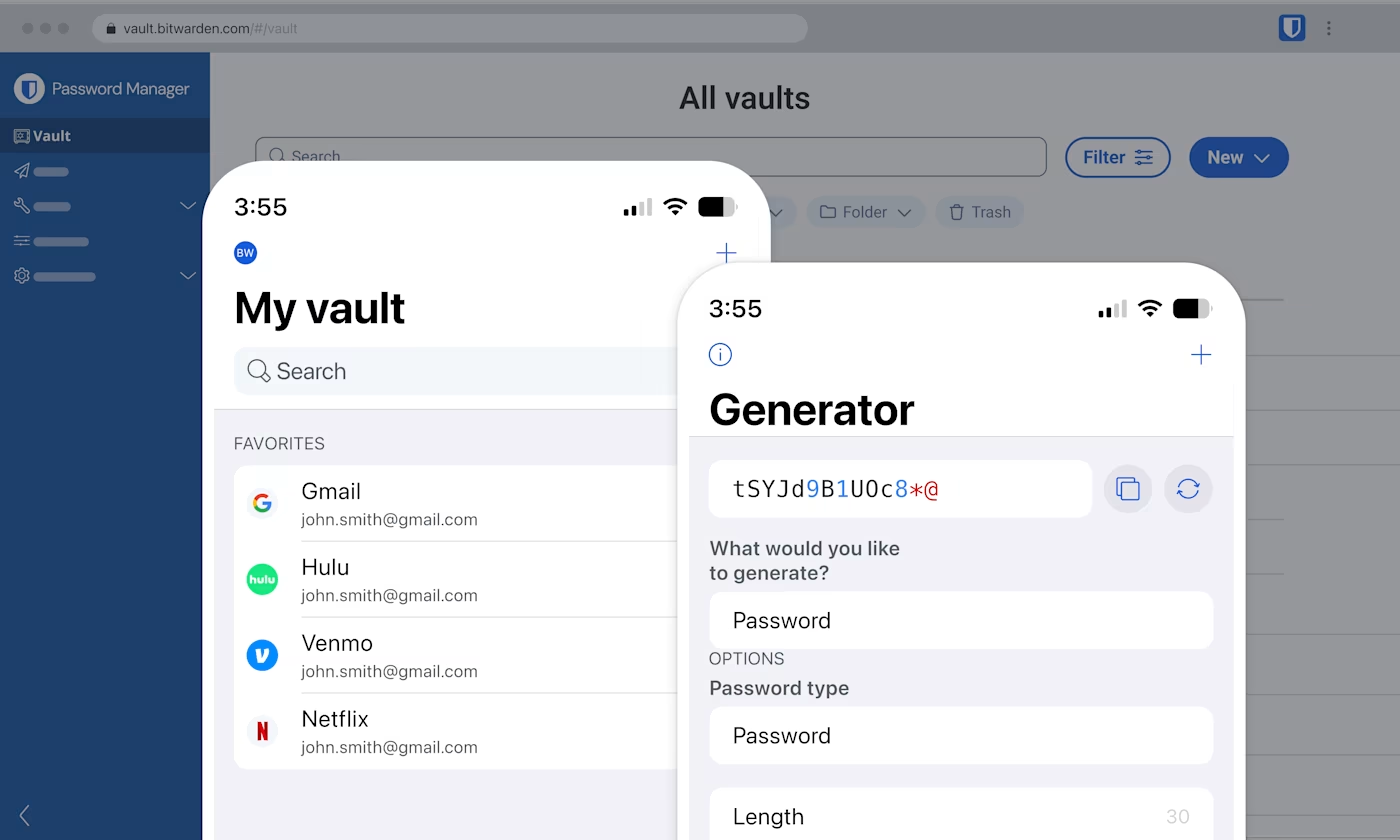
Bitwarden covers both sides of the credential problem: the passwords and passkeys your people use, and the secrets your applications and infrastructure depend on. Both run on the same zero-knowledge, end-to-end encrypted foundation.
Bitwarden Password Manager
Encrypted vaults for every employee, with secure sharing, passwordless options, and full admin oversight.

Bitwarden Secrets Manager
Secure storage and injection of developer and machine secrets, replacing hardcoded credentials in code and config.
Straightforward, transparent pricing.

Teams
$4

Enterprise
$6
Premium
$1.65
Pricing shown in USD, billed annually, and correct at time of writing. Volume and multi-year discounts are common for larger deployments. Talk to us for a quote in your currency.

What makes Bitwarden the enterprise choice.
Open source and audited
Bitwarden's code is public and independently audited. Security teams can verify how it works rather than trusting a closed vendor claim. This transparency is a genuine differentiator over proprietary competitors.

Self-hosting option
Run the Bitwarden server entirely within your own infrastructure so credential data never leaves your environment. This matters for government, financial services, and any organisation with data sovereignty requirements.
SSO and directory integration
Login with SSO, SCIM provisioning for Microsoft Entra ID and Okta, and Directory Connector for Google Workspace and LDAP. Provisioning and deprovisioning happen automatically as staff join and leave.
Passwordless and MFA
Support for passkeys, hardware security keys, biometrics, and two-step login. Bitwarden works alongside YubiKey for hardware-backed authentication, which The Kernel can supply and deploy together.
Audit logs and reporting
Event logs feed directly into SIEM platforms such as Splunk for centralised monitoring. Vault-wide reporting gives security teams visibility into weak, reused, and exposed credentials across the organisation.
Built for adoption
Bitwarden is easy enough that employees actually use it, which is the entire point. 2.4x more employees use it regularly when mandated company-wide, and 70% of enterprise customers go live in under a month.

Fits your existing identity and security stack.













How a typical engagement looks
Plan
Deploy
Integrate
Migrate
Adopt
Support
Compliance
Frequently Asked Questions
Bitwarden is an open-source enterprise password manager that secures passwords, passkeys, secure notes and credentials in an encrypted vault. It gives organisations secure sharing across teams, password policy enforcement, and visibility into credential activity for audit purposes.
Yes. Bitwarden offers both cloud deployment and self-hosting, so an organisation can keep credential data inside its own infrastructure. This is frequently the deciding factor in regulated sectors and jurisdictions with data residency requirements.
Bitwarden supports SSO with providers including Okta, Microsoft Entra ID, Google Workspace and AD FS, plus directory sync and SCIM for provisioning and deprovisioning. Event logs feed SIEM platforms such as Splunk, Microsoft Sentinel, Rapid7 and Elastic.
Bitwarden uses zero-knowledge, end-to-end encryption with AES-256, and its codebase is open source and publicly reviewable. The platform holds SOC 2 Type 2 certification, undergoes third-party security audits, runs an active bug bounty programme, and supports GDPR, CCPA and HIPAA requirements.
Bitwarden Access Intelligence identifies risky credential behaviour and shadow IT across an organisation, prioritising critical applications and guiding password updates. It gives security teams a route from visibility to action, which matters most when reducing credential risk across large user populations.
The Kernel distributes Bitwarden across the UAE, Middle East, Africa and CIS through its channel partner network, supporting both cloud and self-hosted deployments including identity provider integration and rollout planning.
Both are password managers offering encrypted vaults, cross-device syncing, and business-grade access controls. The key architectural difference is that Bitwarden is open source and offers full self-hosting, letting organisations run the entire password management server on their own infrastructure — an option most proprietary password managers, including 1Password, don't offer at all. For organisations with data residency or sovereignty requirements, that self-hosting option is often the deciding factor.
Yes. Bitwarden can be deployed entirely on an organisation's own infrastructure — on-premises or in a private cloud — giving full control over where credential data is stored and processed. This is a common requirement for government entities, regulated industries, and organisations in the UAE and wider MEA region working under data residency mandates.
Ready to close the credential gap across your organisation?

Talk to our team or start a free trial. We will help you plan the rollout, choose cloud or self-hosting, and drive the adoption that makes it work.